-Why would I study Óðsmál? -Óðsmál brings to us profound understanding
In an easy and enjoyable way
learn to understand all concepts in Heathenry / Paganry / Ásatrú – our forni siður (ancient tradition) / Forn Siðr / Vanatrú / Vanatro
– and understand the allegory in myths and sacred poems
– unravel the symbolic language of myths and reveal the hidden meaning.
Step by step, one concept at the time, to understand, in the end, the whole.
Then we realize that the whole is much bigger than our delightful meaningful parts.
And the whole happens to be we ourselves.
Pitch for “understanding all concepts” 1 min 05 sec:
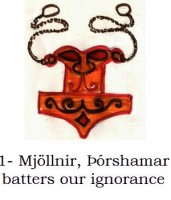
–Þór is our power in life. We find him inside – by transcending (nýsa niður (Hávamál)). The power to destroy our ignorance, our tröll, is Mjöllnir. We gain Mjöllnir by transcending (nýsa niður), and the skill in action to wield Mjöllnir. We shall learn to understand what our myths and poems are conveying: Understand the allegory and symbolic language of myths. Mjöllnir is our divine means to rid ourselves of tröll (/ignorance); Þór is our inner might and main, endurance, and our knowing the purpose of life. See all the electricity-reference in Þór and his things.
*
***
1 min 29 sec pitch for Þór:
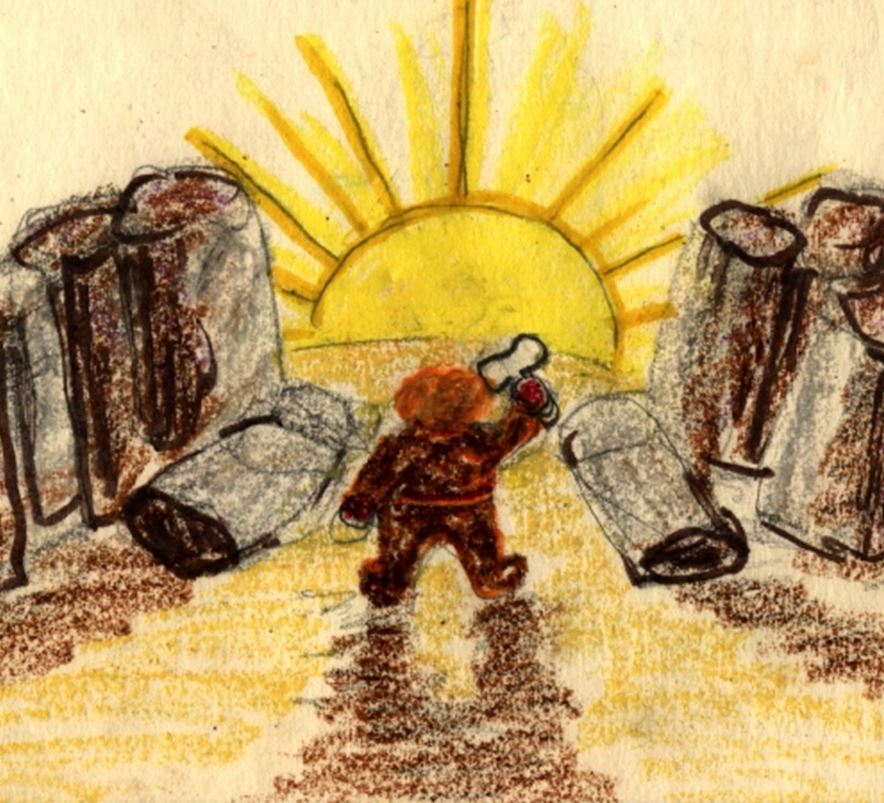
The text for (the above) 1 minute Youtube-pitch: Þór Þór is our inner strength – might and main. We should trust our might and main, and use it for our evolution, the purpose of life. Our Mjöllnir is our divine power to batter our ignorance, our tröll, who deprive us of seeing Truth. We now let in the rays of Goddess Sun, Sól, the goddess of enlightenment. Stagnation in tröll is our unseen enemy of whom we shall rid ourselves. Þórs daughter, his sons, his gear, and his servants, are worldly powers, electricity, and our great inherent power for evolution. Myths convey Truth. Myths are not history. They are a way of giving knowledge and wisdom to men who are pure enough to understand. Be careful _not_ to believe in the letter. Personifications are a trap: we take personified powers for guys and dolls walking on earth. Mjöllnir is not a hammer. Mjöllnir carries out our might and main in the most quiet and still innermost. We should believe in our might and main, and use it for our spiritual evolution.
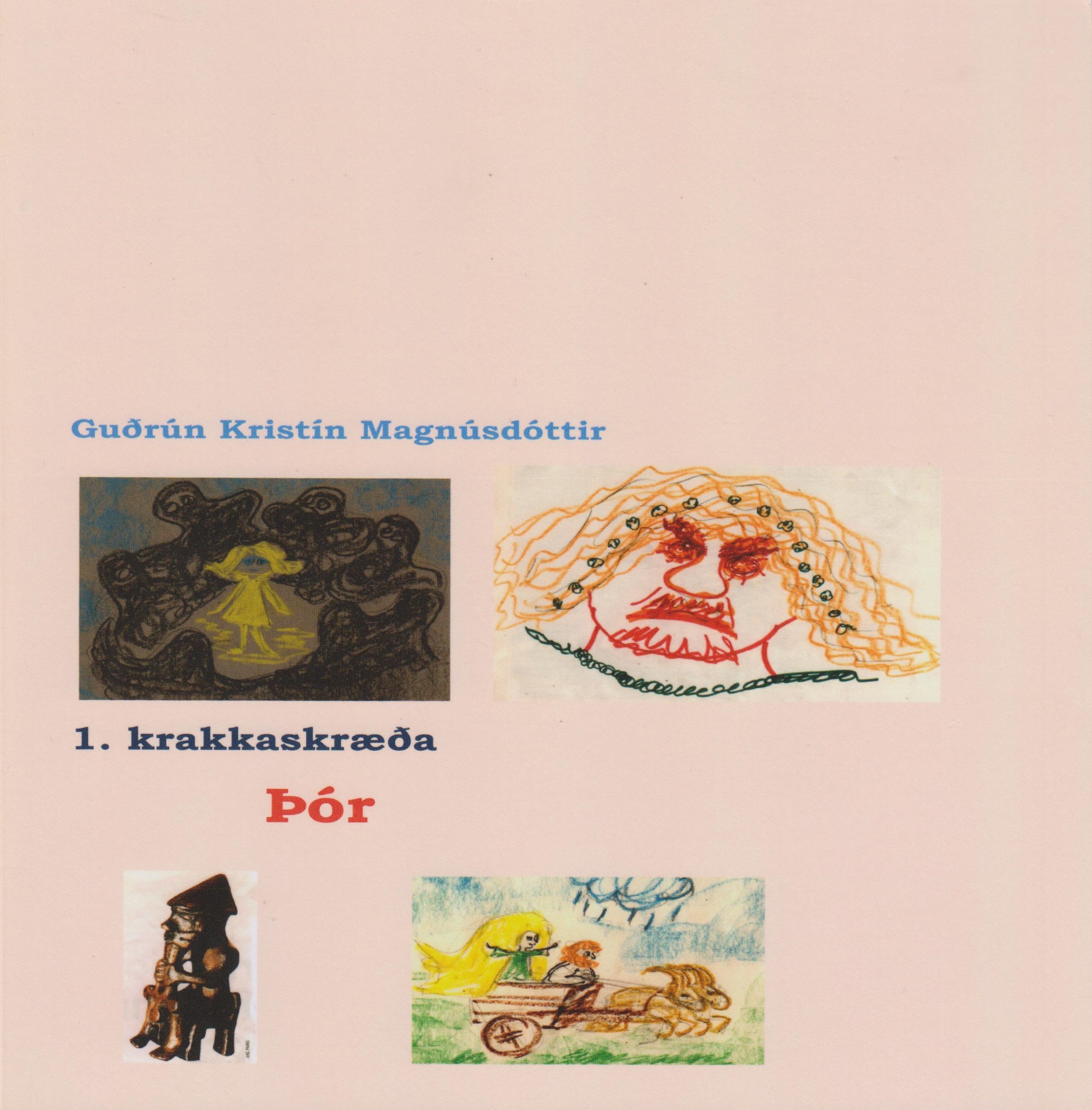
English 2014 edition The complete book Óðsmál – Þór(1 of 40) on Youtube read by Guðrún Kristín Magnúsdóttir 17 min 34 sec
Note: 2014 edition
***
Icelandic 2014 edition The complete book Óðsmál – Þór (1 af 40) on Youtube read by Guðrún Kristín Magnúsdóttir 13 min 57 sec
Note: 2014 edition
***
More to ponder on:
* tröll is, in all ways, terribly negative a term. Has a negative connotation in many languages. Could be, according to etymology, from Sanskrit stem dru2, run, flow, even carrying the meaning of: run into as attacking what is of a higher nature. We do not know if that meaning got conveyed into our tröll or not.
what does it mean to go Eastwards to batter trolls?
are many things and/or attributes belonging to Þór which give the idea or connection to electricity?
is Þór a strong man holding a hammer? if no, then what is he?
can we find Þórs name in a week-day, in a planet, in the human brain? if yes, then which ones?
can personifications lead us astray? if yes then how and why? * has this anything to do with illiteracy on allegory?
does everyone understand the real meaning of Edda poem Þrymskviða? — the ancient Icelandic/OldNorse word melðra† -–if looked up in dictionary of etymology– is as mjöll mjöl mala, milled by turning the quern to grind, becoming: to fling Mjöllnir to crush ignorance; * ignorance has no place; it should not be; * tröll are our lack of seeing; * Mjöllnir always returns when flung, as it circles
why would Freyja and Þrymur not possibly unite in a marriage?
does Þrymur realize what he asked for, or is he only in love?
could Loki be mankind? * did Loki not realize what he asked for from Freyja in poem Þrymskviða? *Loki fucks things up all the time, then tries to amend when all is going down the drain – can we see ourselves here?
is Sigyn our true friend even if we are stupid and immature creatures? * always understand meaning of names * Sig is most likely sigur, victory, -yn is said to be vin, friend * Sanskrit loka means a world, see also Icelandic ljúka, loka, ljúka upp (finish, close, open up) reminding of cycles * and in that context connotation to zodiac * Loki’s day is Icelandic Laugardagur, English Saturday
is Þór red-headed / is his hair red? (a stupid question)
***
Til umhugsunar:
* tröll er eitthvert mjög svo neikvætt fyrirbrigði, á sér neikvæða samsvörun í mörgum málum, en gæti, orðsifjalega séð, verið komið úr sanskrít, af stofni drú2, hlaupa, renna, og getur þar jafnvel haft merkinguna að ráðast gegn því sem æðra er, hvort sem það hefur nú ratað í okkar tröll eður ei;
hvað er það að fara í austurveg að berja tröll?
er eitthvað í Þór sem fær okkur til að detta í hug að tengja hann rafmagni?
er Þór sterkur karl með hamar? ef nei, hvað er hann þá?
finnst Þór í nafni reikistjörnu, nafni vikudags, í mannsheila? ef já, þá hverjum?
geta persónugervingar krafta verið afvegaleiðandi? ef já, þá hvers vegna? – kemur þetta ólæsi á launsögn við?
skilja allir launsögn Þrymskviðu?
flettið orðinu melðra† upp í orðsifjabók, berið saman mjöll mjöl mala, og það að snúa kvörn í hringi, og sveifla Mjöllni –sem fer ekki neitt, nú eða kemur alltaf aftur til þess manns sem notar hann
hvers vegna geta Freyja og Þrymur ekki giftst?
er hugsanlegt að Loki tákni mannkynið? (-klúðra, og reyna að redda-?)
er Sigyn tryggur vinur okkar þótt við séum vitlaus og vanþroska? (Sig sigur, -yn, vin)
er Þór rauðhærður? (asnaleg spurning)
***
Kids! Perform an Edda Poem ritual: Þrymskviða (English) 13 min 46 sec Suggestions on Youtube by Guðrún Kristín Magnúsdóttir:
***
Krakkar! Helgileikar úr Eddukvæðinu Þrymskviða (Icelandic) 10 min 16 sec on Youtube by Guðrún Kristín Magnúsdóttir:
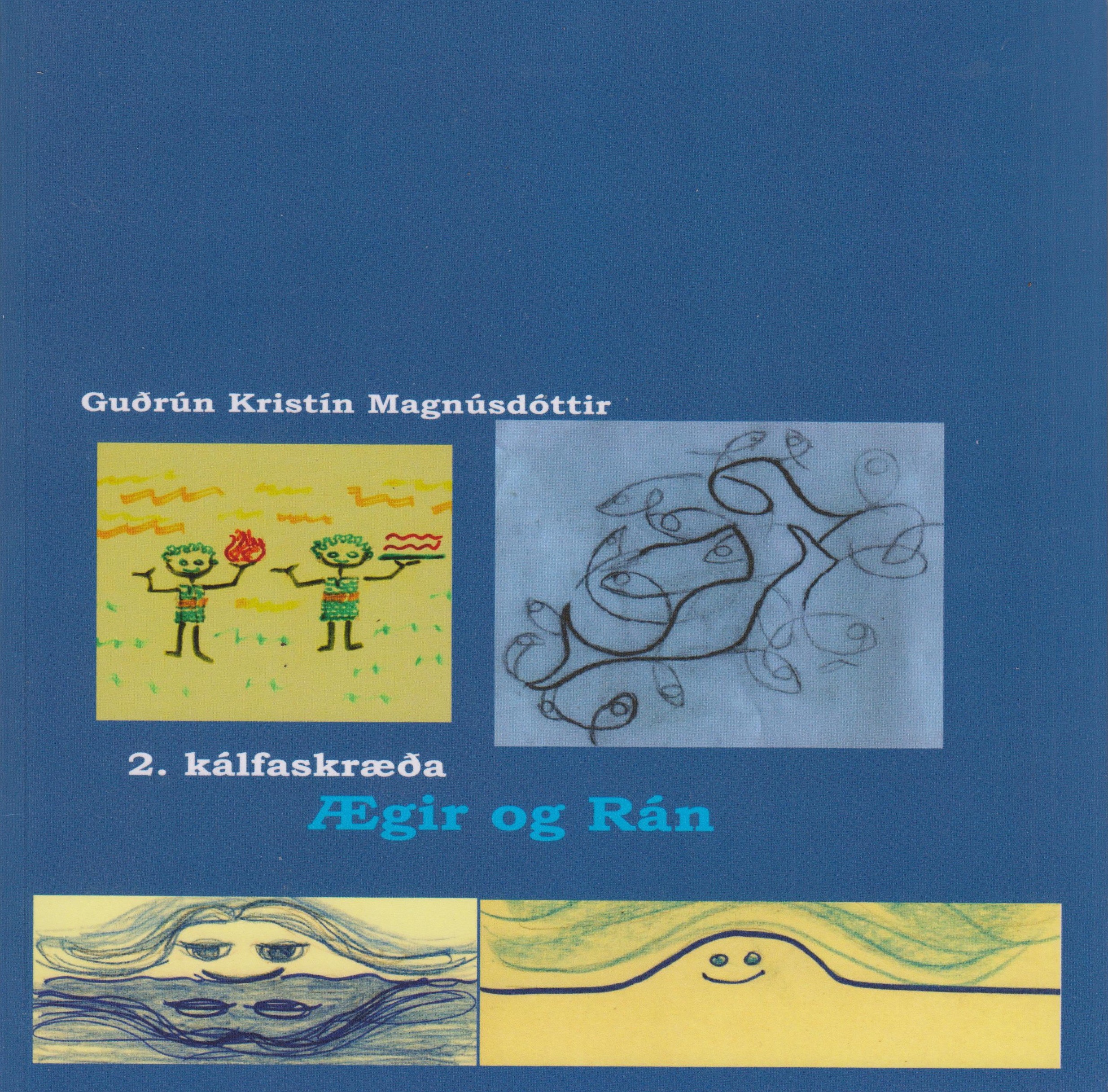
-Who are Rán and Ægir? –Ægir is the abyss of waters, ginnungagap, and Rán is the prefect order in the universe. Personifications a tricky thing, as we might take Ægir and Rán and such mythological characters for guys and dolls. They are not people. They are powers in the universe and in us. We plunge into Ægir, our own consciousness, to purify and nurture ourselves.
*
***
1 min 27 sec pitch for Ægir and Rán:
The text for 1 minute pitch Ægir and Rán (above): 02 Ægir and Rán are The Great Void, Ginnungagap, and the perfect orderliness here-in. Ægir is the unfathomable ocean of intelligence, whom we can easily access – as we _are_ it. Rán from sanskrit rach, as are the words rögn and regin (gods) too, is the orderliness of Total Natural Law, the flawless, the precise, the all-ordering – in the ocean of existence, Ægir. Even if personified in myths, Ægir is The Unmanifest, referring only to Itself. Iðavellir, the ever moving Field. We should always live in accordance with the Laws of Nature. Understand Rán. Violating the Laws of Nature is a sin. Destroying and causing disharmony is a sin as it disturbs the whole perfect symphony of the Universe. We are humans and we can understand.
English 2014 edition The complete book Óðsmál – Ægir and Rán (2 of 40) on Youtube read by Guðrún Kristín Magnúsdóttir 17 min 46 sec
Note: 2014 edition
***
Icelandic 2014 edition The complete book Óðsmál – Ægir og Rán (2 of 40) on Youtube read by Guðrún Kristín Magnúsdóttir 15min 07 sec
Note: 2014 edition
***
More to ponder on:
* note that at Ægis is good old Icelandic, and compare it to @ in Emails; lots of English words are Old Norse – at least some 2000 they say – fun to know where from words come * what do the words rögn and regin mean, and the proper name Rán? (etymology: orderliness) * is meaning originally contained in names somehow lost in English? my first severe cultural shock was in England, on asking a boy what his name meant -means!!? he replied, looking at me as if I were a fool, -it is just a name (the expression on his face and the tone of his voice conveying: what a question!) — actually I translated his name into Old Icelandic and looked it up in our dictionary of names’ meaning, which is a normal thing for us Icelanders to do * what, actually, do Eldir and Fimafengur serve for us? and what do their names mean? * which is less tiring of the two: 1) to dance all day with daughters of Rán,Ránardætur, whose names are Bára, Blóðughadda, Bylgja, Dúfa, Hefring, Himinglæva, Hrönn, Kólga, Unnur – very entertaining – or 2) to dive into the abyss of Ægir? would you like to explain the answer? * what do our senses perceive? * who are our 5 höfuðskepnur (höfuð-skepnur (main-created), elements)? and which sense corresponds to which one? * why would our forefathers have gotten the idea to use Ægir when explaining the yet unfathomable depth of our consciousness? * is our universe, the sounding Ymir, only a wave on Ægir? * does the wave (universe) contain the inherent Rán, orderliness? * why should we live in peace and harmony with our gods and not violate the Laws of Nature?
***
Til umhugsunar:
* þar eð orðalagið at Ægis er góð forn íslenzka, er engin ástæða til að veigra sér við að nota @ og segja at; það er pempíuskapur að rita {hjá} í stað at, kjánaskapur að segja hjá í stað at í okkar ágæta herra Emil pósti; * þegar fræðingur segir (með hnussi) að þetta „at Ægis“ sé fornmál, bendi ég honum á að orðið sími (raunar hvorugkyns upphaflega) er í fornu máli þráður, og var tekið upp í nútímaíslenzku yfir telefón — og virkar vel (tele úr grísku fjar, fón úr latínu rödd); * hvað þýða orðin rögn og regin, hvað þýðir nafnið Rán? (orðsifjar úr sanskrít rach: orderliness) * hefur merking nafna glatast í sumum málum, t.d. ensku * mitt fyrsta menningaráfall erlendis var þegar ég spurði strák: -hvað þýðir nafnið þitt; -þýðir?!! þetta er bara nafn. * lifir merking nafna og skilst í sumum málum? * hvað framreiða Eldir og Fimafengur eiginlega handa okkur? * hvort er minna þreytandi til lengdar 1) að dansa með Ránardætrum —sem eru: Bára, Blóðughadda, Bylgja, Dúfa, Hefring, Himinglæva, Hrönn, Kólga, Unnur–– skemmtilegar mjög eða 2) sóast í Ægi? — viltu rökstyðja svarið? — * hvað er það sem okkar skilningarvit nema? * hverjar eru höfuðskepnurnar 5, og hverri samsvarar hvaða skilningarvit? * hvers vegna skyldi forfeðrum okkar hafa dottið í hug að nota samlíkinguna Ægi um óræða dýpt vitundar, hið iðandi svið Iðavelli? * er alheimurinn okkar, Ymir okkar ymjandi, aðeins alda á Ægi? * hefur hver alda (/alheimur) alla reglu Ránar að geyma? * hvers vegna lifa í sátt við guðin og stríða eigi gegn lögmálum náttúrunnar?
Why all these amazing trinities? -Yes, isn’t that funny! Three, but still one. We find them all over. The gods Óður Hænir Lóður give us human attributes, so now we are divine beings. No small thing, man!
*
*
*
***
1 min 22 sec pitch for Trinities:
The text for 1 minute pitch for Trinities (above): 03 trinities – our marvellous trinities found all over ! Simply delightful to explore them. Why are there so many three-in-one,s? How come that one divides so rationally into three, which, though, never stop being the one? Even the great void, ginnungagap, displays as three to begin with. Yet ginnungagap is only the total potential of Natural Law, perfect orderliness, infinite creativity, the never-changing field. The creative power also displays as three. Nature has 3 qualities. What is so disturbingly rational about becoming 3? Are these ever-moving, different qualities inherent and latent in the one? Can the three be a prerequisite for movement and creativity and differences within the one?
English 2014 edition The complete book Óðsmál – Trinities (3 of 40) on Youtube read by Guðrún Kristín Magnúsdóttir 24 min 27 sec
Note: 2014 edition
***
Icelandic 2014 edition The complete book Óðsmál – Trinities (3 of 40) on Youtube read by Guðrún Kristín Magnúsdóttir 22 min 22 sec
Note: 2014 edition
***
More to ponder on:
* Amazing all these trinities * by all means understand the most important ones * –but here our educational system fails us: understand the trinity: studies as Óðinn Vili Véi— * the student as Óðinn, is the one who possess all knowledge as knowledge is structured in consciousness, and we are consciousness * Vili is the student learning, the will to obtain knowledge thinking mind, reading, the use of our senses Vili connects to, and metabolizes * Véi is what is studied, that which is known * Consciousness-based Education emphasizes the student, his consciousness, process of learning, and what is studied * are Gerður Skaði Gunnlöð a trinity? * was I only finding þurs-maidens III for the scholars? trying to make something come out of the scholars’ misreading of manuscripts, their misunderstanding? * is the amusing intrusion of Þjóðvitnir really helpful in opening our eyes? exposing our illiteracy? * am I picking on you when I point out the wide-spread illiteracy? * why do some not want to understand the underlying meaning? * has that rejection something to do with being adherent to at system and not wanting to understand any new Truth? * are there some people who find their own religion filled with meaning, but claim other men’s traditions to be some naïve primitive stuff? * can systems –which though are claimed to explain everything– become some kind of fetters on our free thinking? * how does that connect to not wanting to understand the symbolic language of our ancient myths and poems? * what is the difference between systems on one hand, and on the other hand Truth, consciousness, pure wisdom? * would it be a good thing, good for our spiritual evolution, to rid ourselves of our rigid religious systems? * what does the Buddha-monk mean by: walking on carrying the boat on the head, after it has served the purpose of getting us over the river?
***
Til umhugsunar:
* er ekki merkilegt að svona margar þríeindir skuli fyrirfinnast? * endilega skiljið hina veigamestu þríeindina okkar –en hér yfirsést menntakerfinu okkar hrapalega–: * nemandinn er Óðinn, sá sem er þekking, hefur alla þekkingu, — nemandinn er svið allrar þekkingar, þekking er innbyggð í vitund — * Vili er það að nemandinn lærir (hugur, lestur, skilningarvit) Vili tengir og umbreytir, tengir þekkinguna (/nemandann) við það sem við erum að nema (/námsefnið) * námsefnið (bókin, þusið í kennaranum, upplýsingar) er Véi (þetta sem vitað er) * vitundarþroskamenntun leggur aðaláherzlu á vitund nemandans. * eru Gerður Skaði Gunnlöð nokkuð þríeind? * var ég ekki aðeins að redda fræðingunum útúr þursameyjauppspunanum (/mislestrinum) þeirra á handritum? * eru innrás Þjóðvitnis og fyndnar ídettingar til þess gerðar að uppvísa um ólæsi okkar? * hvernig virkar það sem ádeila á okkur og aðra þá sem ekki skilja táknmál? * hvers vegna vilja sumir menn ekki skilja táknmál og launsögn? * kemur það því við að hyllast eitthvert kerfi og neita að skilja annað? * telja sumir sitt kerfi hafa að geyma djúpan skilning, en telja að annarra manna siðir séu aðeins frumstætt og barnalegt rugl? * geta kerfi (sem þó eru sögð útskýra allt) orðið tjóður í skilningsleysi? * hver er munur á kerfum og sannleikanum, vitund, tærri þekkingu? * er nauðsyn að losa sig við kerfin okkar til að fljúga frjáls í himinvídd vitundar? * búddha-munkurinn sagði: maður gengur ekki með bátinn á höfðinu eftir að maður er kominn yfir ána
 -Why would I study Óðsmál?




 Óðsmál