-Do they weave our fate? -Not exactly. Some confusion. and a later-time misleading imprinting, has mislead our understanding. We should know all about our responsibility, and facing what örlög really is. Who made it in the first place.
*
*
***
Pitch for Urður Verðandi Skuld 1 min 32 sec:
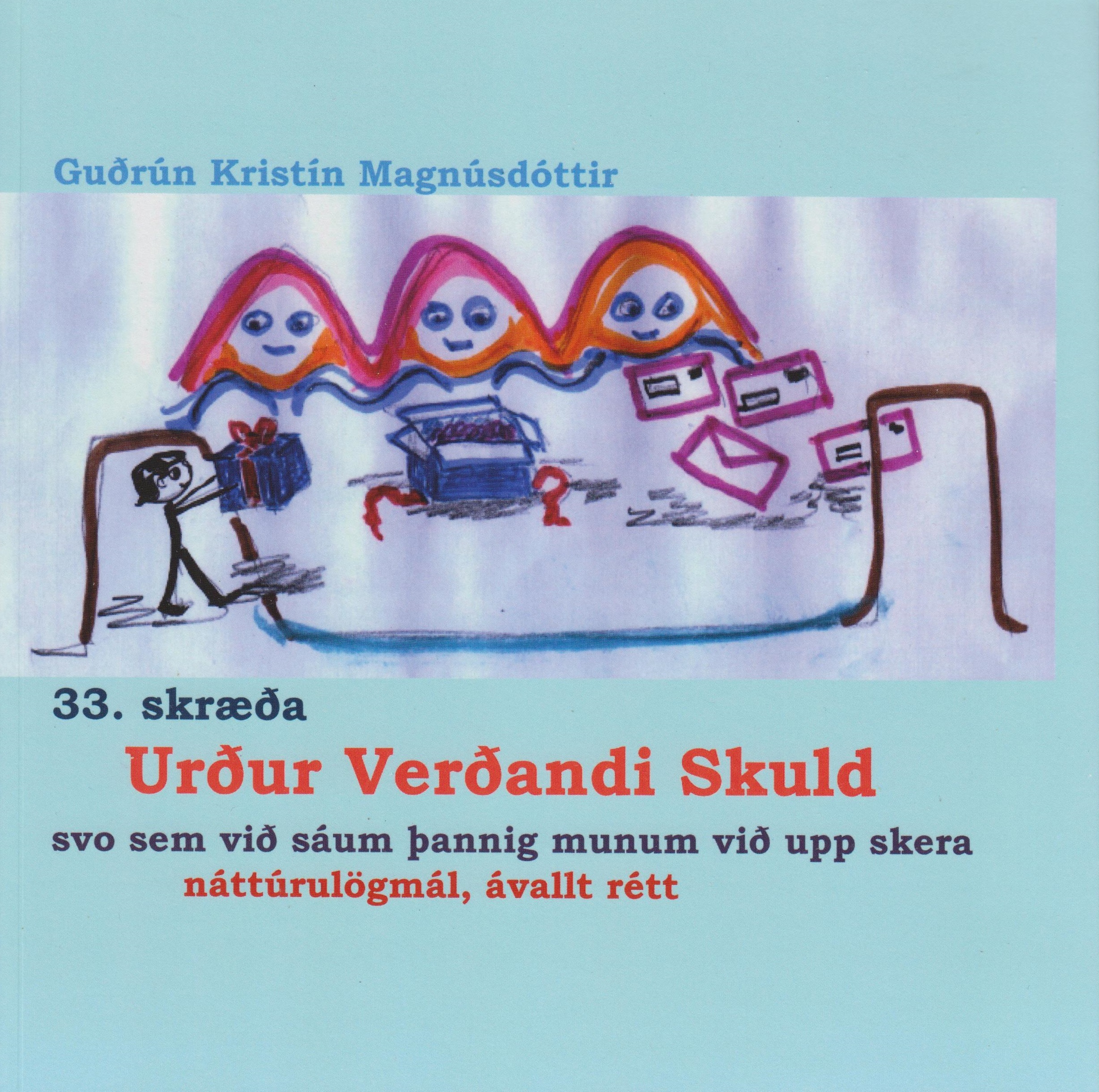
The text for 1 minute pitch Urður Verðandi Skuld (above): 33 Urður Verðandi Skuld
We make our fate. Urður Verðandi Skuld do not. We have not excuse of: They wove our örlög/our fate. We are all-responsible ourselves. Urður Verðandi Skuld are a Natural Law, a Law of Nature. The law of karma. Always right, always flawless. Urður is our actions, our words, thoughts, acts. Here we sow the seed of our coming karma, and reap accordingly in due time. We set forth vibrations. Whatever is set forth returns to its origin. A Law. Verðandi never fails in here calculations of actions, time, and due consequences. We cannot fathom these ways of actions. They are too complex. In Bhagavad Gita Krishna say: unfathomable is the course of action. –This was stolen in Rome, changed, and used as an answer to a question to which they had no answer. Do not undermine Roman strategy.–
But we might overestimate our knowledge of the consequences of actions. That is simply because of utter lack of proper education. Óðsmál shall amend this drastic flaw. We shall become men of true understanding.
English 2014 edition The complete book Óðsmál – Urður Verðandi Skuld (33 of 40) on Youtube read by Guðrún Kristín Magnúsdóttir 27 min 17 sec
Note: 2014 edition
***
Icelandic 2014 edition The complete book Óðsmál – Urður Verðandi Skuld (33 of 40) on Youtube read by Guðrún Kristín Magnúsdóttir 25 min 49 sec
Note: 2014 edition
***
More to ponder on:
* Urður Verðandi Skuld — as we sow, so we shall reap * Urður Verðandi Skuld are a Law of Nature always right — an action has an equal reaction * do we always know where from our Skuld comes — and who is responsible for her, in the first place? * can the weather-gods, the tri-guna, and the Roman god named God, be whimsical and overwhelmingly un-reliable? * do they control us or do we control them? * is Mother Nature, by her nature, all-perfection? * who would it be who overstrains her tolerance? * enginn má sköpun renna – nobody can run away from / flee his örlög * who makes/made these unavoidable örlög? * why would it be wise to consider one’s own Urður right now? * what does Jesus mean by sow and reap accordingly? * do bairns come across some inconsistency or incongruity such as: one thing is said and taught and demanded, while the one who preaches the rules himself acts contrary to them? –if yes, will they learn the “hidden message” that, as a rule, rules, can be shunned or twisted? * what is “the hidden curriculum” in schools? * can you give examples of these double-ethics’ rules in daily life? * is easier to set rules than to keep rules? * what sarcastic joke does the Icelandic word prestur (“a priest”), for a road-sign, convey? (–mjói vegurinn means the narrow road–)
***
Til umhugsunar:
* Urður Verðandi Skuld, = sá og uppskera, * náttúrulögmálið: gjörð á sér mótgjörð að jöfnu * skiljum við alltaf hvaðan okkar Skuld kemur, og hver stofnaði til hennar? * geta Gunnarnir, veðurguðirnir og rómverski guðinn Guð verið duttlungafullir og yfirþyrmandi óáreiðanlegir? * stjórna þeir okkur eða við þeim? * er náttúran af eðli sínu alfullkomin? * hver ofreynir þanþol hennar? * enginn má sköpun renna – hver bjó til óumflýjanleg örlögin? * hvers vegna væri snjallt að huga vel að sinni Urði einmitt núna? * hvað meinar Jesú með: að sá og upp skera? * hvað þýðir: ósamræmi í boðum og „skilaboðum“? eitt er predikað og kennt, hegðan gefur önnur og gagnstæð skilaboð? * hvað er dulda námskráin í skólunum? * lenda börn í svona uppeldi? lendum við í svona í þjóðfélaginu? * getið þið tekið dæmi? (– er hægara að kenna heilræðin en halda þau?–)
-Bird’s eye view? Are you trying to tell us that we do not see the whole picture? -Not only that, but also we seem to, ignorantly and heedlessly, tread on some precious little flowers called weeds. Shaking us up – Óðrerir and Þjóðrerir – so that we really want to understand the profundity of existence.
The text for 1 minute pitch guided bird’s eye view (above): 34 guided bird’s eye view
Litla kjaftfora völva, the little talkative völva, tends to put things forward in a straight and even shockingly true way. She, here, opens our eyes for what we should know but seem not to see or even give a thought. What we might call weeds in the moor, or heath, not noticing at all under our feed, litla kjaftfora völva brings to life for us. She tells us how we need to wake up. And we should know that duality is the cause of fear. We can live the sphere of no duality. We need not fear anything, as we need not live in sphere of time and space only. Human mind can easily expand to infinity, find the source of thought, the origin of all. Litla kjaftfora vövla also tells us about our ancient numbers 9 12 36 108 216 432 which our forefathers really held in esteem. Guided bird’s eye view really means broad-mindedness and overview, as to fathom the whole, including all the beautiful differences, in the midst of which we live: that is our dear world and our precious life-spans on earth.
English 2014 edition The complete book Óðsmál – Guided bird’s eye view (34 of 40) on Youtube read by Guðrún Kristín Magnúsdóttir 33 min 38 sec
Note: 2014 edition
***
Icelandic 2014 edition The complete book Óðsmál – Guided bird’s eye view (34 of 40) on Youtube read by Guðrún Kristín Magnúsdóttir 40 min 36 sec
Note: 2014 edition
***
More to ponder on:
* what would illiteracy in a broader sense mean? * could there be some truth in the theory about Æsir as men having originated in India and brought with them culture, terms, names, and names of places found there? * is pseudo-gold something glittering that we take for pure gold? –if yes, do we sometimes get deceived by fakes? * can we pretend being all-knowing by using complicated concepts (–sometimes called intellectual jargon–) without actually understanding them? * can some get taken in/fooled by such Schauspiel-propagandists? * will it be enough for our fast evolution to deny all worldly stuff, such as Gungnir and the gold of Gymisgarðar? * or should we enjoy our things and belongings, and also show up in lognfara lundur, nýsa niður? (=transcend to consciousness) * did Icelanders ever believe in that devil-invention? * could Icelanders be frightened by such threats? (no, we mocked him) * was (after year AD 999 in Iceland) considered funny and daring to put disdain on the gods with blasphemy and libellous poems? –if yes, do you think that the ones who did that counted for supports from the new authorities? * is still going on in the world some effort to try to make indigenous traditions look pathetic? and do some try to make them look like some superstitions? –if yes, is that often done to replace them with theocracies? * do all Heathens, Pagans, ásatrúarmenn, yet understand the profundity of the ancient tradition we own? * do these men know who the gods are? * might these people wear some labels, make some superficial values, surface, and thereby claim to be Heathens/Pagans/ásatrúar * what is needed to legally found a religious sect/association? * what is the gain (if any) of the registration? * do some authors, scholars, artists — even official institutions — interpret SkírnismálEdda poem as porno and/or threat towards women? * do our opinions expose our state of consciousness? * do our opinions expose our knowledge? * how is the invented/falsified “history” which Max Müller made for the British Empire and its exploitation of India? * is this falsified stories still going strong, and even taught in schools? * can lies be persistent once they have been circulated? * is our poor little world a bit under-nourished? * would that be something like Jesus calls: a withered branch? * what is: waking out of the waking state? * what do the names Óðrerir (Óðhrærir) and Þjóðrerir mean (note: hræra to stir, stir up, rerir hrærir he who stirs (up)) * do some mix up the 1)Icelandic Sagas on one hand, and on the other hand 2)Norse mythology, myths and poems? * can you explain the difference between the two? * which of the two, –1)Icelandic Sagas and 2)Norse mythology, myths and poems– is literature, which not? * we (Icelanders) are lucky to be a nation having been in our own land since the settlement, no overtaking of any indigenous peoples * can all nations take pride in this kind of inhabitation? * many claim the Irish, who moved to Iceland perhaps around year 850(?) to have been fleeing the Roman Churchianity, owning a beautiful tradition themselves * know the oldest man-made “house” in Iceland to be a man-made cave from the times/centuries of the settlement of the Irish * numbers in our forni siður are interesting — please see in that context, yuga, cycles, age of our universe * are time and space some created concepts * what then about directions and spans? * what is that which we call the form of “things”? (note that namarupa means name and form) * are we our forefathers re-born * do we actually get born in order to, in the end hopefully, to understand who we are in core and essence?
***
Til umhugsunar:
* hvað þýðir ólæsi í víðari skilningi? * Helgi Hálfdánarson skrifaði orðin goðum líkir í einu orði goðumlíkir, og síðan hefur orðið goðumlíkur sess sem rétt íslenzka * er bitastæð kenningin um að Æsir sem menn hafi komið frá Indlandi og flutt með sér menningu og staðanöfn sem þar finnast? * hafið þið heyrt kenningar Stens Bergmann um Israelsættirnar? * eru fleiri kenningar um uppruna víkinga sem fluttu norður á bóginn? * er orðið selsengull fyndið orð, og getum við tekið þetta til okkar? (selst sem gull) * er hægt að slá um sig með orðum og hugtökum, án þess að skilja dýpt þeirra? * er nóg fyrir okkur að hafna Gymisgarðagullinu og Gungni, eða verðum við að mæta í lognfara lundinn og nýsa niður? * trúðu Íslendingar á djöfulinn? voru þeir ekki hræddir við neinar svona grýlur? * þótti (og þykir enn?) fyndið að níða goðin, og sáluhjálp í að aðhyllast guðveldið rómverska? * skildu heiðnir menn (skilja þeir nokkuð ennþá?) dýpt forna siðar eða hvað guðin eru í raun? * gætu heiðingjar hengt á sig merkimiða, búið til yfirborð, sagst vera vo vo friðsamir og góðir, og talið sig þar með vera heiðna? * hvað þarf til að fá skrásetningu trúfélags í lagalegum skilningi? * hvað vinnst með því að skrásetja trúfélög? * eru Skírnismál klámleikrit og/eða kvennakúgun í huga sumra höfunda, fræðimanna, listamanna, opinberra stofnana? * lýsa skoðanir okkar vitundarstigi okkar? * hver var hin upplogna saga Max Müllers gerð fyrir yfirráð Breta? * er sú uppdiktaða saga lífseig (einsog annar uppspuni getur verið)? * er grey litli heimurinn okkar næringarlaus? er það sama og hjá Jesú: ónýtur kvistur á eld kastað? * hvað er að vakna uppúr vöku? * hvað þýða nöfnin Óðrerir (Óðrærir) og Þjóðrerir? (-rerir, -rærir, sá sem hrærir upp í?) * rugla sumir saman Íslendingasögunum (annars vegar) og (hins vegar) ævafornum norrænum goðsögunum og kvæðum? * hver er munurinn? hvort er bókmenntir, hvort er menningararfleifð? * gaman er og dýrmætt, að við erum þjóð sem alltaf hefur verið hér á okkar eigin landi. – það er kannski ekki hægt að segja um allar þjóðir, er það? * talið er að Írar sem hingað fluttu í upphafi Íslands byggðar hafi ekki verið „Rómar-kristnir“ heldur átt miklu fegurri kristni eða fornan sið * vitið af elsta manngerða húsnæðinu á Íslandi, manngerðum helli * tölur í forna sið eru áhugaverðar, og athugið yúgur (ferli, og aldur alheims) í því sambandi * er tími og rúm sköpunarfyrirbæri? áttir og vegalend? * hvað er það sem við köllum lögun hluta? (ath nama-rúpa er nafn og lögun) * erum við forfeður okkar endurbornir? * fæðumst við til að skilja hver við erum í raun?
-Is matter not for real !?? -Actually we make it in our head. Call it a world. But it is intangible and all-flickering non-stuff. But yet, sound and waves are really powerful tools, once we master the subtle technique of using it correctly.
*
*
***
Pitch for sound and “matter” 1 min 37 sec:
The text for 1 minute pitch sound and “matter” (above): 35 sound and “matter”
We make our world out of vibrations. They become so concrete in our head, that we claim them to be solid, or liquid, or something tangible. But they are all flickering, unstable, really not to get hold on. Some of us do not know that the world is imagined, made up, and that Reality cannot be heard, touched, seen, tasted, or smelled. We, of course have heard that some men live a material life only, and we might have heard about the split-ups in ginnungagap, we might know that our gods arranged the sounding Ymir into elements. But that does not guaranty that we really understand the whole thing. All is flawlessly harmonized. The sound of Heimdallur is connected to the memory of Mímir. There is no false tone in the symphony. We should never ever make one which violates the Laws of Nature. We should find the flow and rhythms of Nature, live in tune with Her. We shall learn how to grow our food with the perfect sound for every step of growth. That means healthy food, healthy bairns, a healthy world, a perfectly sounding world of men. We shall live a life in uninterrupted spiritual progress, success, wealth and prosperity. The usefulness of the Vedic calendar is in connection with Maharishi Yagya performances. Through Maharishi Yagya performances we approach and nourish the Laws of Nature. The Vedic calendar tells us about the rhythms of nature. When Maharishi Yagya performances are in accordance with the rhythms of Nature, our lives remain in tune with all the Laws of Nature. This is supreme management of life. In Vedic Civilization life is lived in uninterrupted spiritual progress, success, wealth and prosperity.
English 2014 edition The complete book Óðsmál – sound and “matter” (35 of 40) on Youtube read by Guðrún Kristín Magnúsdóttir 25 min 42 sec
Note: 2014 edition
***
Icelandic 2014 edition The complete book Óðsmál – sound and “matter”(35 af 40) on Youtube read by Guðrún Kristín Magnúsdóttir 25 min 56 sec
Note: 2014 edition
***
More to ponder on:
* can we arouse ripples on consciousness? * to where leads the bridge Bifröst? * tívar are bright; do we not see them? * tívar are everywhere, in everything; do we not see them? * do we know that some things/concepts are shallow, but some are profound? * what would that be in connection to human life? * what is shallow, what is deep, when comes to understanding of life? * do we digest thoughts and incidents as we digest food? * how do we gain a sip of Valföðurswine and Jesus’s wine — and how do we have it flow in human life? * where are mind and body when I nýsi niður into my “thoughtlessness”? * do I need to be a living man to be able to evolve? * is the body any barrier for the mind and its nature to seek the expansion of Glaðheimar? * is the body really all-porous vibrations? * why would Gungnir (/vibrations) be a weapon in myths’ symbolic language? * produce the sound Aaaaaa, end it in a point K, and then again…. which symbols infinity coming to a point, then from point to infinity again * compare to Hávamál: orð mér af orði orðs leita / word from word I seek – and this I do by nýsast niður * note that nýsa niður is told in past tense in Hávamál: nýsta ek niður * why would that be? * when pending, hanging in nothingness, on vingameiður, nýsandi niður (nosing down), thought is not, so we tell afterwards * and then future tense: runes thou shalt find * is our food healthy when it contains the perfect Gungnir? all natural qualities are lively, intelligence is there, contains praña? * know that only by consuming healthy and “lively” food containing intelligence, can our digestion produce ojas, the finest outcome in the body; * food devoid of intelligence can never digest into ojas in our physiology * do we make our food unhealthy? * do we not understand the finest Gungnir in our food? * is there too much added stuff for shelf-life and “looks”? * is our food appropriate if it contains sin? * as life is not little things but The Whole, can partial knowledge be inadequate and even dangerous? * is education often partial, lacking The Wholeness? * can we enliven tívar in everything in our life? In all life? * does valkyrja serve me when I bring (/sacrifice) my individual consciousness into ginnungagap? * what is, and where is, Ásgarður? * is a trip to Ásgarður a most natural undertaking for me? * is Gungnir super-strings? * can we measure Gungnir? * Is Gungnir tangible? * do scientists, with their elaborate devices, have difficulties in pinpointing Gungnir because of his flickering nature and whimsies? * what does the name Gungnir mean? * is our Ymir only sounds? * is the universe all sound and vibrations? * note: research can affect the behaviour of the object researched – so Gungnir behaves whimsically when we perform research on him; * the researcher affects the object researched, — meaning: our very attention on some phenomena changes their behaviour * is our attention a powerful tool? * should we choose carefully what we pay attention to?
***
Til umhugsunar:
35. skræða hljóð og efni * getum við ýft gárur á vitund? * hvaða bil brúar Bifröst? * tívar eru bjartir; sjáum við þá ekki? * vitum við að sumt er grunnt, annað er djúpt? * hvað er þetta í sambandi við mannlíf? * hvað er grunnt og djúpt í sambandi við skilning á lífinu? * meltist jafnt fæði sem og hugsanir og atvik? * og hvað verður af þeim bylgjum sem þetta meltist í? * hvernig bergjum við á víni Valföðurs og víni Jesú — og komum því sem flæði í mannlíf? * hvar eru hugur og kroppur, þegar ég nýsi niður í „hugsanaleysið“ mitt? * þarf ég að vera lifandi maður til að geta þróast? * er kroppurinn okkar gljúpur og eintómur Gungnir? * er kroppurinn okkar fyrirstaða þegar hugur sækir í Glaðheima? — ef já þá skilgreina svarið — ef nei þá skilgreina svarið * hví skyldi Gungnir vera vopn/geir á táknmáli goðsagnanna? * myndið hljóðið Aaaaa, endið það í punkti K, og svo á ný …..sem táknar óendanleikann í punkt, og úr punkti í óendanleikann * minnir þetta á: orð mér af orði orðs leita við að nýsast niður * ath: sagt frá í þátíð í Hávamálum: nýsta leitaði nam, því í hangi á vingameiði og við að nýsa niður er ekki hugsun * semsagt: sagt frá/kennt eftirá hvað gerist við að vera nýsandi niður * svo: rúnar munt þú finna (framtíð) * ath einnig í sambandi við virkjun í Ýrufossi og Ljósafossi að yfirborð Þingvallavatns var hækkað og lækkað með vatnsþörf stíflunnar (stöðvarinnar) í huga, sem er öfugt við náttúrulega árstíðabundna yfirborðshæð — sem svo olli því svo að klakið í vatninu misfórst — ég bjó þarna og sá þetta gerast * (ath: nafnið Írafoss er misskilningur Landsvirkjunar; fossinn hefur ýru úða sem regnbogi er á í sól og heitir réttilega Ýrufoss) * verður maturinn okkar hollur þegar hann er fullkominn Gungnir, og allir lífsnauðsynlegir náttúrulegir þættir fá að lifa? * gerum við mikið af því að gera matinn okkar næringarsnauðan og innihaldandi óæskileg aukaefni og jafnvel synþ? * lífið er heild, ekki smáþættir * skapar brotakennd menntun hættu? * getum við lífgað tíva í öllu okkar lífi? í öllu lífi? * þjónar valkyrjan mér við að sóa einstaklingsvitund í gapið mikla? * hvar er og hvað er Ásgarður? er skrepp hingað eðlislægt okkur? * er Gungnir super-strings? er Gungnir mælanlegur, finnanlegur? er hann illhöndlanlegur með mælitækjum vísindamannanna sakir duttlunga sinna og hverfulleika? * hvað þýðir nafnið Gungnir? * er Ymir okkar eingöngu hljóð? ymjandi? alheimur hljóð og bylgjur? * eru alheimar allir í ginnungagapi – þar eð ekkert annað er en ginnungagap? * er Ymir aðeins hljóða-alda á Ægi? * ath: Gungnir er svo duttlungafullur, óhöndlanlegur og hverfull, að hann jafnvel breytir hegðun sinni við það eitt að vera athugaður. * Sá sem athugar og gerir rannsóknir hefur áhrif á fyrirbærið sem hann rannsakar * er athygli skapandi kraftur * ættum við að vanda val okkar þegar að athygli kemur?
-What do mean “hides Reality”? We see her clearly. -What our senses perceive as our beloved and beautiful Nature, is her volatile appearance. In reality she hides what our senses perceive not: Reality.
*
*
*
***
Pitch for Mighty old Nature 1 min 48 sec:
The text for 1 minute pitch Mighty old Nature (above): 36 Mighty old Nature
We love her, adore her, and she is giving, yields all good. What we can do in return of the gifts and blessings, is to transcend, nýsa niður. This is: giving in return. Meiðmar. She will be pleased, she will be peaceful, and care for us her little stupid naughty bairns. If we do not give back we are mere thieves. If we do not give back, only take and take, some disharmony will build up. We are all responsible. Nature can tolerate a lot from us, like a loving mother, but in the end, if we do not give back, she can take no more and will burst. Her way of bursting is no small thing. Do you know that Nature is not any tangible stuff. Do you know that she is a veil, a cover, which hides away from our eyes Reality Itself. Do you know that we can easily transcend and get away from her triguna, 3 qualties, to reload our batteries, and to set our mind-set right, stop making mistakes and flaws, take no more than we really need? I have the feeling that Nature was named bad skessa, man-devouring trolless, so that we should not love her. Rather men should pray, and show up in church on Sundays. But I doubt if that was the correct way to give her back for her blessings, as we did not stop exploiting, killing, and destroying.
English 2014 edition The complete book Óðsmál – Mighty old Nature (36 of 40) on Youtube read by Guðrún Kristín Magnúsdóttir 34 min 03 sec
Note: 2014 edition
***
Icelandic 2014 edition The complete book Óðsmál – Mighty old Nature (36 of 40) on Youtube read by Guðrún Kristín Magnúsdóttir 35 min 16 sec
Note: 2014 edition
***
More to ponder on:
* our only natural state is enlightenment * then Nature provides for everything * do we know that Nature behaves according to our state of consciousness? * when we live an exalted state of consciousness, Nature is kind, but her tolerance can, in the end, take no more if we violate Her Laws: * do we know that this is called: to arouse wrath of gods? even if it is Nature, not gods, who bursts * our gods are the presidents of the Laws of Nature, preside over NL, so we understand the term * are we to blame for calamities? * are 1) Nature’s calamites, and 2) wars of the same human cause? * are the Sodoma and Gomorra God’s wrath stories akin to Nature’s tolerance bursting? * who claims Heathens to “believe in” logs and stones? * note that log can mean a bridge over a brook, and stones often are landmarks, so log and stone can be indication to know one’s way; but * can we see Nature’s phenomena (such as logs and stones) to be a “cue” into That which She hides out of sight? * do people “believe in” icons, idols, graven images, fetish, as such * or has this tangible work-out another significance/meaning? hidden meaning? * would believe in one´s own might and main be the same as atheism? * would this self-confidence be a better tool in life, if we connect to, are grounded in, the almighty power within? * what is the difference of 1)being a withered leaf in the storm (at the mercy of winds) and 2)to be anchored to the innermost unbounded power by the roots of The Ash, Askur Yggdrasils? * as Nature is only Gungnir which we perceive as “matter”? *where, then, abides the perfect order found in Nature? * can we men learn to think and act from pure consciousness? * do we know where from Nature’s gifts come? * can we men outsmart the þursamegir III, 3 þurs-macs, triguna? (3 qualities of Nature) * what are the qualities of sattva? of rajas? of tamah? (þursamegir III) * are these three worldly qualities to be found in every man´s physiology? mind? actions? in all created things and phenomena? * is the aham-kaar, the I-making, I make myself as an individual on the sphere of the created? * do I need to leave that ego in the sphere of creation, in order to get rid of the III þurs-macs, triguna? * do I nose within Nature when I nose down, transcend, nýsi niður? * can the man-eating skessa in the mountain be Mother Nature, invented as a tool to get men off the love for Nature? * is it Nature-worship to admire the flickering beauty of Nature? * or do Nature-worshippers claim Her to be something tangible? * if we can call Nature a personification, then of what? * can you discuss the meanings implied by Nature-worship? * is Nature divine? — if yes, then how is that view supported by rational thinking? * is everything that is created divine in essence? * is Nature a mythia (imagined to be visible but a non-existing fake)? * how are we, in Hávamál 1st part (–behavioural code for the crude ones–) asked not to be greedy, take no more than sparingly needed? and * asked not over-indulge in food to the extent that others mock us for it? * how does the phrase The Lord gave and The Lord took indicate belief in the unpredictability and duality of the world? * does duality bring fear (–fear of the unknown, as all in creation is change–)? * where is no duality, and thus no fear? * is an enlightened man fearless? what would he fear? * who can create disharmony, discordance? disturb the perfect flow? is that man (including both genders)? * and can man also create harmony and accordance?
***
Til umhugsunar:
* hið eina eðlilega ásigkomulag manns er uppljómun * og náttúran sér okkur þá fyrir öllu * vitum við að náttúran stjórnast af vitundarstigi mannanna? * náttúran er blíð ef við erum á háu vitundarstigi, en þanþol hennar brestur ef við gremjum goð að oss, þ.e. stríðum gegn lögmálum náttúrunnar * goðin eru forsetar náttúrulögmálanna * eru náttúruhamfarir þá okkur að kenna? * eru 1) náttúruhamfarir og 2(-) styrjaldir af sömu ósvinnu okkar sprottnar? * hver segir að heiðingjar „trúi á“ stokka og steina? * trúa menn á skúrgoð (skurðgoð/líkneski) * eða hefur svona áþreifanleg/sýnileg útfærsla annan tilgang? táknar og hylur innri merkingu. * er það að trúa á mátt sinn og megin sama og vera guðleysingi? * virkar slíkt sjálfstraust betur, ef maður tengist ótæmandi mætti með rótum asksins? * eða virkar sjálfstrausið kannsi ekki ef maður er fjúkandi laufblað? * þar eð náttúran er aðeins Gungnir sem við nemum, hvar býr þá þessi alfullkoma regla sem í náttúrunni finnst? * getum við menn lært að vinna útfrá tærri vitund? * vitum við hvaðan gjafir náttúrunnar koma? * getum við menn náð undirtökunum gagnvart þursapeyjum þrem, eiginleikum náttúrunnar? * hverjir eru eiginleikar sattva? rajas? tamas? (þursamaga þriggja) * finnast þessir þrír veraldlegu eiginleikar í líkama og huga hvers og eins lifandi manns? * er ahamkaar (ég bý mig til sem einstakling) á sviði skapaðs? * þarf ég þá að sóa egóinu til að komast innfyrir Gunnana þrjá? * nýsi ég innfyrir náttúruna þegar ég sóast? * getur skessan verið móðir náttúra í áróðursherferð gegn náttúrudýrðkun? * er náttúrudýrðkun aðeins það að dáðst að fegurð náttúrunnar? * eða er nattúrudýrðkun að halda að hún sé bitastæð, sjá ekki að hún er mythia (ímynduð; gljúpt plat-yfirborð)? * segjast heiðnir menn vera náttúrudýrðkendur? * hvaða merkingar (fleiri en ein) eru lagðar í það hugtak? * hvernig er varað við rányrkju í fyrsta hluta Hávamála? * einnig varað við því að verða að athlægi við ofneyzlu? * er eitthvað til sem heitir náttúrutrúarbrögð, eða voru brögð í tafli við tilbúning á þessu orði? –(ath: aur í orðinu hvítaaur þýðir silfur, komið úr latínu aurum (framb. árúm)) * hvernig lýsir drottinn gaf og drottinn tók trú á veraldlegt tvíeðli? * veldur það ótta að lifa í tvíeðli/andstæðum þess skapaða? –ef já, hvar er óttinn ekki til, engar andstæður til? * hver riðlar jafnvægi, og getur einnig skapað samhljóm/samræmi?
Our present education is a lump of ignorance, as it does not touch on the “only thing necessary”: how to enrich human life with divine inner power, health, wisdom, bliss; We are told, in Consciousness Based Education, that knowledge is structured in consciousness.
-Can we have perfect schools and super-kids? -Yes. You are right. Consciousness-based Education is the key to a perfect life for every child.
*
*
*
***
Pitch for Consciousness-based Education (CBE) 1 min 28 sec:
The text for 1 minute pitch Consciousness-based Education (CBE) (above): 37 Consciousness-based Education (CBE)
Education is puny without its basis. What is its basis? We have not understood hitherto that we are studying ourselves. We are the knowledge. The student is the knowledge. Education has not been nourishing for students. It has drained them, and we know that stress is to be found in schools. It should not be so. Emphasis has been on the act of studying, and the material studies. What we forgot is, that the student himself is the divine knowledge. Within the student we find total knowledge. We dive into consciousness, which is easy as we are it. Here we scoop up into life the correlation. We make better use of our whole brain, our nervous system will be stress-free, our thinking becomes effortless and clear, our understanding of all things will be more profound, we enjoy greater creativity, initiative, and joy. -Are you sure? -Yes. This supreme ancient consciousness-based education has been scientifically studied for years. We have super-kids. Every child has the potentials to be a super-kid.
English 2014 edition The complete book Óðsmál – Consciousness-Based Education (37 of 40) on Youtube read by Guðrún Kristín Magnúsdóttir 35 min 34 sec
Note: 2014 edition
***
Icelandic 2014 edition The complete book Óðsmál – Consciousness-Based Education (37 of 40) on Youtube read by Guðrún Kristín Magnúsdóttir 44 min 02 sec
Note: 2014 edition
***
More to ponder on:
* consciousness-based education, CBE, has the main emphasis on the student, his consciousness; * know which is our most important trinity – Óðinn Vili Véi in connection to education * unfortunately, old fashioned schools miss out this vital factor of consciousness, offering only the 2 last bits: learning and the learned * the student is Óðinn, he who all knowledge possesses –the student is the sphere of all knowingness –knowledge is in consciousness, and we are consciousness * Vili is the will to seek knowledge, to learn, to study –Vili connects and processes, connects knowledge (the student) to the studied (our subjects of study) –Vili is metabolism, he directs awareness to knowledge, and connects awareness and seeking to what we want to understand –Vili is our own consciousness referring to itself * Véi, then, is the tangible stuff we are studying, that which is known found in books and by listening to the teacher, doing research on it * more about the role of Vili, so that we understand his role: –in Yoga asana (in hathayoga) Vili connects body-and-mind to consciousness – yog means connection –yoga asana and stretches mean connecting to That –asana, a seat, means to sit firmly in That (–it does not mean merely to sit on the floor in a certain position–) * what Vili indicates is consciousness aware of consciousness looking for knowledge * Véi then is knowledge found in consciousness as nothing else is — nothing else is to be found * why do we only find knowledge here inside when we seek knowledge? * what does þagall and hugall mean profoundly? (literally not talking, but thinking) * can crude men do that profoundly by making a mood, or an outer appearance? * what is research in consciousness? * do empty barrels make the loudest noise? do those in shallow waters make the biggest splashes? * what makes stress accumulate in students – in all grades of school? * how do we get rid of all stresses in the physiology and in the nervous system? * how do we get all students to be pure, and possessing clear thinking? * which is more natural to us 1)accumulated stress or 2)being a perfectly pure individual? * does school-environment in these old-fashioned, non CBE, schools create stress in pupils? * can man’s IQ be heightened? or is it fixed from birth? * what is so precious about the prefrontal cortex of our human brain? * are understanding, rational thinking, contemplating some faculties only attributes of humans? * where is total knowledge to be found? * are school-books and teachers good to have there for us? * is the only purpose of education to get a well-paid job later on? * what is the supreme goal of all education? * do the all-powerful Laws of Nature work effortlessly? * can we learn to work effortlessly from the abyss of our human mind when it is expanded to infinite Glaðheimar? * where do we find that which cannot be found in our worldly stuff? * is it practical to find everything in our own consciousness? * compare 1) the first part of Hávamál which asks us not to be greedy, and 2) the last part of Hávamál which tells us to imbibe all knowledge in consciousness, and so to make all things easy, all in the flow of Nature, all actions powerful and simultaneously right actions only * what does is mean, in the wisdom part of Hávamál, that we gain fimbulrúnir, good charms, become wise and all-knowing? * is good for young bairns, who are moulding their views, and evaluating their surroundings, “making their world”, to enjoy a stress-free care and a positive environment? * in CBE (consciousness-based education) schools where all learn a technique to transcend, TM, and practice it twice daily, no bullying exists, no animalistic pecking order is there; * the best for ADHD is nýsa niður (transcend)
***
Til umhugsunar:
* vitundarþroskamenntun leggur aðaláherzlu á vitund nemandans * skiljið hver veigamesta þríeindin okkar er: Óðinn Vili Véi í sambandi við menntun –hér yfirsést skólunum/menntakerfinu okkar hrapalega–: * nemandinn er Óðinn, sá sem er þekking, hefur alla þekkingu, — nemandinn er svið allrar þekkingar, — þekking er í vitund, vitund er þekking, við erum vitund — * Vili er það að nemandinn lærir, nemur (hugur, lestur, skilningarvit) — Vili tengir og umbreytir, tengir þekkinguna (/nemandann) við það sem við erum að nema (/námsefnið) Vili er umbreyting, melting atvika, það að beina athyglinni að Vili er manns eigin vitund að vísa til sjálfrar sín * Véi er svo námsefnið (bókin, fræðsuþusið í kennaranum, upplýsingar, þetta sem vitað er) * meira um Vila, til að við skiljum hlutverk Vila: * í Yoga asana (í hathayoga) er Vili að tengja líkama-og-huga við vitund – yog þýðir sameining * tenging í vitund er tilgangur yoga asana * í þessu sambandi stöður og yoga-teygjur til að tengja okkur vitund — vitund, ginnungagap, er hið eina sem er — * asana (sæti) þýðir að sitja fullkomlega í eind (ekki það sitja á gólfinu) * það sem Vili vísar til er vitund sem upplifir vitund leitandi þekkingarinnar * og Véi er það að finna aðeins vitund fyrir við þekkingarleit innan vitundar * hvers vegna finnst ekkert annað en þekking í þekkingarleitinni miklu? Hér er aðeins þekking * hvað þýðir þagall og hugall? er sá í þykjustu og ytra útlit? þykjast, yfirborðslega, vera þögull og hugsandi? * hvað er rannsókn innan vitundar? * gleymist botninn suðrí Borgarfirði? bylur hátt í botnlausri tunnu? og tómri tunnu? * gusa þeir mest sem grynnst vaða? * hvað veldur því að streita safnast upp í nemendum á öllum skólastigum? * hvernig vinnum við á streitu og gerum nemandann altæran og skýrt hugsandi? * hvort er eðlilegra og æskilegra:1) uppsöfnuð streita eða 2) altær skýrt hugsandi nemandi? * veldur skólaumhverfi stressi í nemendum í þessum venjulegu gamaldags skólum okkar? * er hægt að hækka greindarvísitölu manns? * hvað er svona dýrmætt við framheila mannsins? * eru skilningur og rökhugsun sérmannlegir eiginleikar? * hvar er alla þekkingu sem við leitum að finna? * eru skólabækur og kennarar nauðsyn/æskilegt * er einasti tilgangur menntunar að við getum grætt peninga? * hver er æðsti tilgangur menntunar? * vinna ægikröftug náttúrulögmálin áreynzlulaust? * getum við lært að vinna áreynzlulaust útfrá dýpstu sviðum hugans? * hvar finnum við það sem við finnum ekki í veraldlega fusinu okkar? * hverju breytir að við finnum að allt er okkar eigin vitund? * tengið saman fyrsta hluta Hávamála sem varar við græðgi og síðasta hluta Hávamála sem kennir að maður nemur upp þekkinguna í vitund til að allt gangi snurðulaust, og allar gjörðir séu fimbulkraftmiklar og í sátt við náttúruna okkar * hvað táknar, í 3ja hluta Hávamála að við nemum upp, frævumst, verðum fróð, öðlumst stinna stafi og ljóðin? * er gott að ung börn sem eru að móta skoðun sína á umheiminum (–þ.e. ákveða hvort hér er vinveitt viðmót eða fjandsamlegt, mótun til lífstíðar–) lifi í streitulausu umhyggju- og þroskavænlegu umhverfi? * í skólum sem innleiða samsviðstæknina handa handa öllum nemendum, þrífst ekki einelti, því engin dýrastigs-goggunarröð er * og það að nýsa niður er hið bezta handa ADHD-krökkum (ofvirkum með athyglibrest)






 Óðsmál